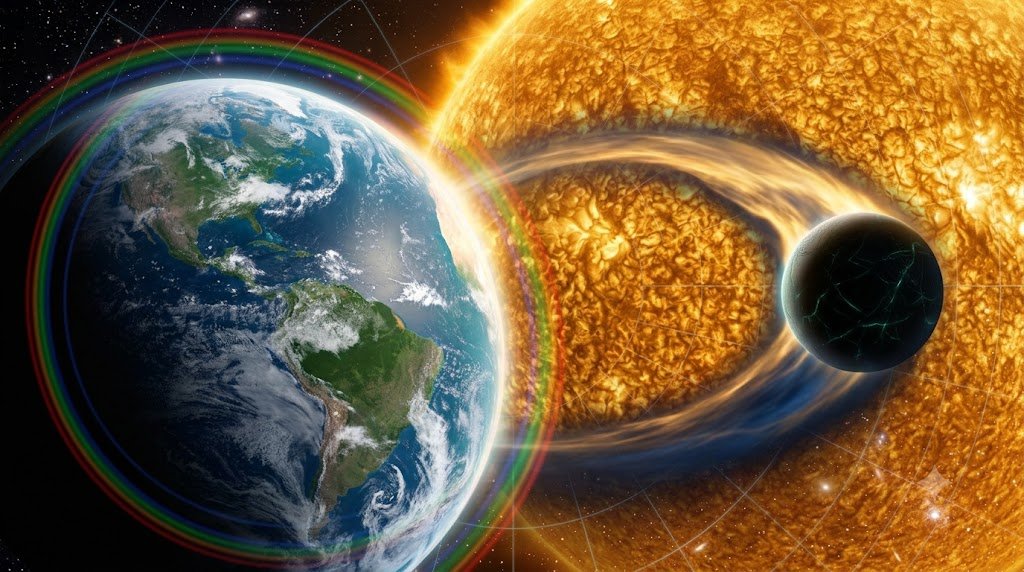
Exoplanetary Detection and Habitability: Transit Photometry, Radial Velocity, and Bio-Signatures

Until the final decade of the twentieth century, humanity’s knowledge of planetary systems was restricted to the single, familiar architecture of our own solar system. For centuries, philosophers and astronomers debated whether planetary systems were ubiquitous cosmic structures or miraculous flukes of astronomical history. In 1995, Michel Mayor and Didier Queloz shattered that historical isolation … Read more

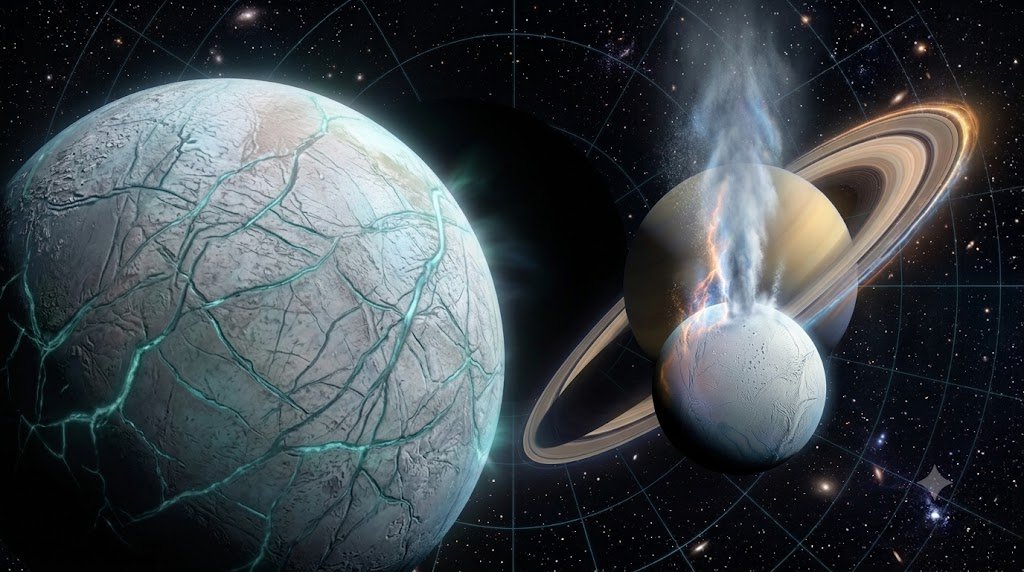
Moons of the Solar System: Tidal Heating, Subsurface Oceans, and Cryovolcanism

For centuries following the invention of the telescope, astronomers viewed the natural satellites of the outer planets as dead, frozen balls of rock and ice—cold relics suspended in perpetual deep freeze. That paradigm was shattered in March 1979 when Voyager 1 soared past Jupiter and photographed active volcanic plumes erupting hundreds of kilometers above the … Read more

The Gas and Ice Giants: Atmospheric Convection, Ring Dynamics, and Deep Magnetohydrodynamics

Beyond the asteroid belt and past the solar system’s primordial frost line lie the four colossal outer planets: Jupiter, Saturn, Uranus, and Neptune. Containing over 99% of all planetary mass in our solar system, these giant worlds are physical titans governed by fluid mechanics, extreme thermodynamics, and exotic states of matter impossible to recreate in … Read more

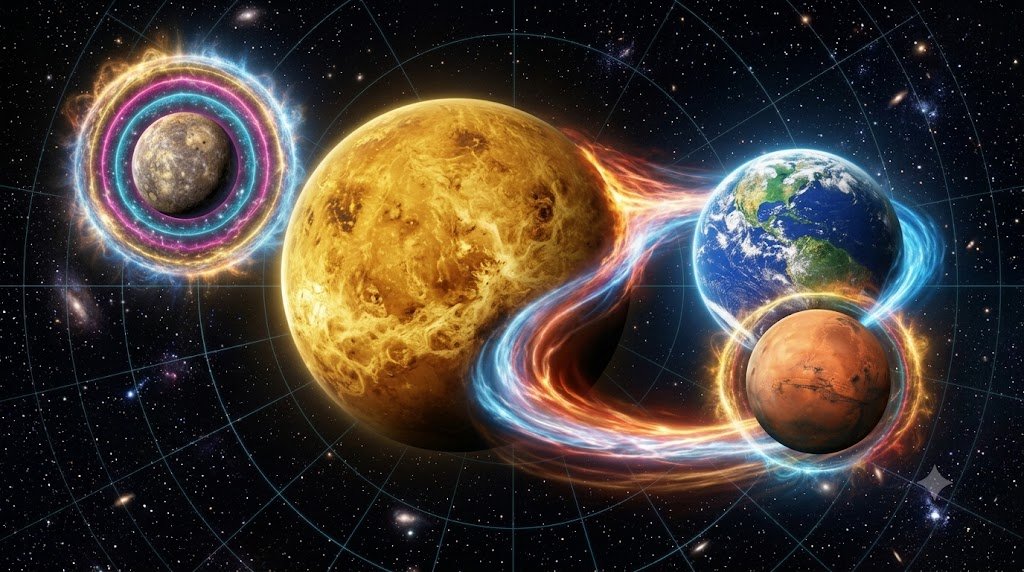
Comparative Terrestrial Planetology: Atmospheres, Geophysics, and Magnetospheres of Inner Worlds

In the inner solar system, within the frost line where volatile compounds could not condense into ice during the protosolar nebula epoch, four rocky worlds formed from the accretion of refractory silicates and metallic iron grains. Mercury, Venus, Earth, and Mars share a common cosmic pedigree, coalescing roughly 4.56 billion years ago from the same … Read more