Deep-Sky Astrophotography Essentials: Sensor Physics, Tracking Mounts, Stacking, and Calibration Frames
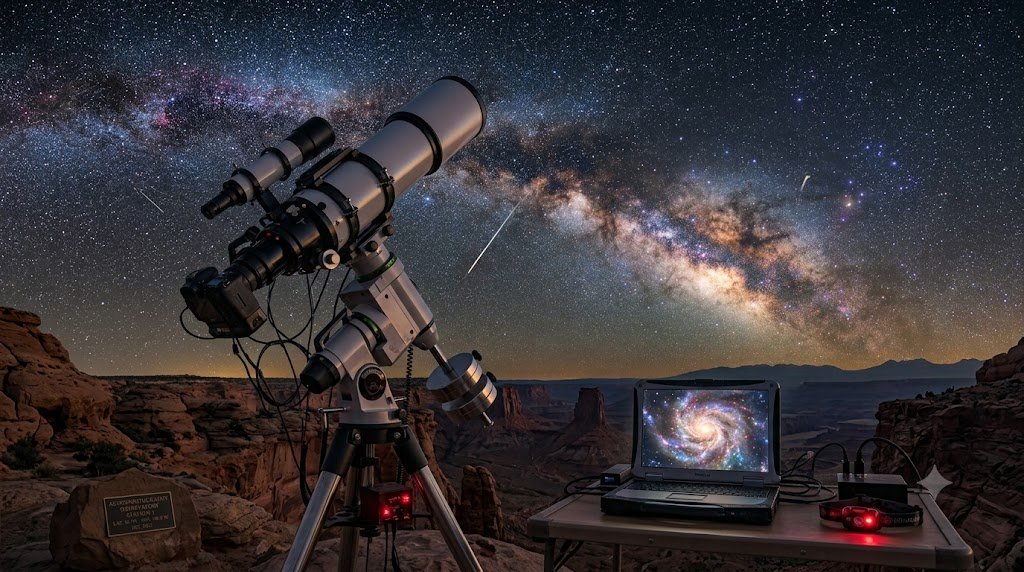
To gaze through a telescope eyepiece at a distant galaxy is an unforgettable visual experience, yet the human eye is constrained by its biological limitations: our retinas process light in real-time fractions of a second (roughly 1/10th of a second exposure time), rendering faint nebulae as soft, monochrome gray clouds. Deep-Sky Astrophotography liberates astronomy from … Read more

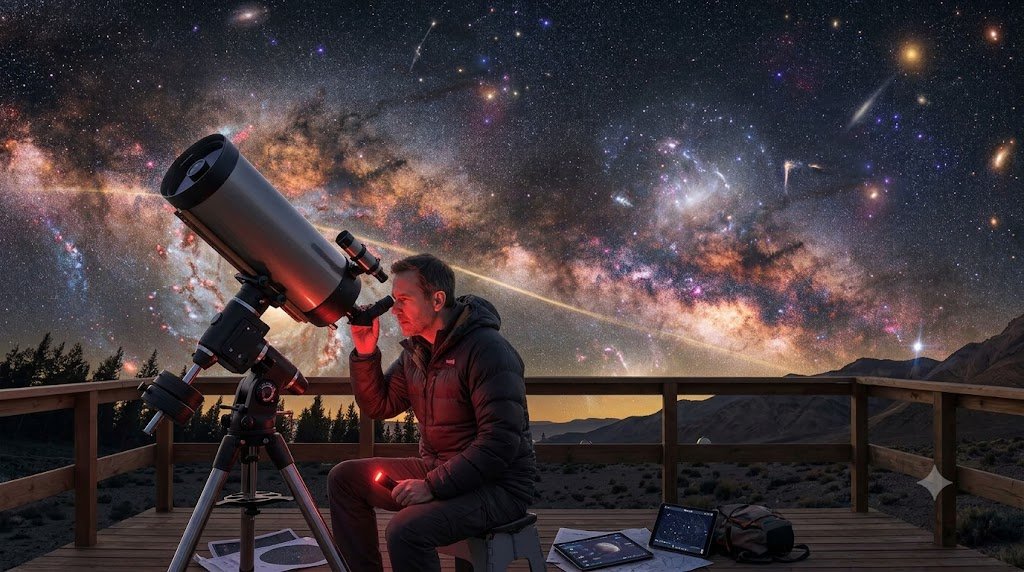
Dark-Sky Site Selection and Atmospheric Seeing: The Bortle Scale, Transparency, and Scintillation

Every astronomer quickly confronts an humbling reality of observational astronomy: the finest telescope ever engineered is completely powerless if looking through turbulent, degraded atmosphere or a sky washed out by artificial light pollution. Ground-based astronomers do not observe space directly; we observe it through the turbulent, fluid, optical ocean of Earth’s atmosphere. A modest 4-inch … Read more

Backyard Astronomy Optics: Refractors vs. Reflectors, Focal Lengths, and Eyepiece Physics

Astronomy is unique among the physical sciences: while particle physicists require multi-billion-dollar underground colliders to probe subatomic reality, amateur astronomers standing in their own backyards can inspect volcanic calderas on the Moon, resolve the cloud belts of Jupiter, and capture photons that departed distant galaxies during the age of the dinosaurs. The fundamental instrument bridging … Read more

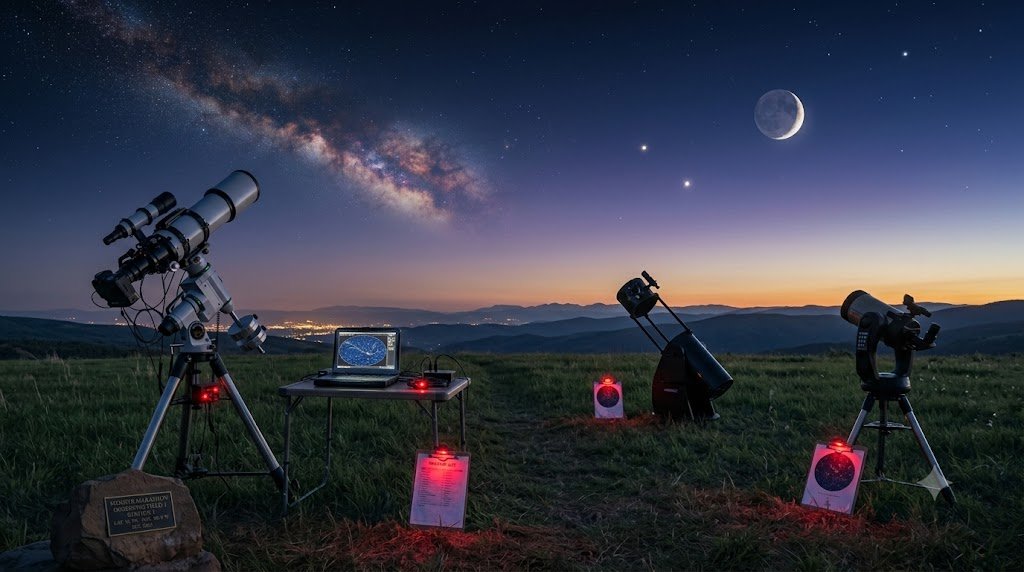
The Comprehensive Messier Marathon Guide: Systematic Strategies for Observing 110 Deep-Sky Objects

In the annals of observational amateur astronomy, there is no endurance challenge more iconic, thrilling, and grueling than the Messier Marathon. Conceived independently in the 1970s by American and European amateur astronomers, the Marathon challenges an observer to systematically locate, view, and log all 110 deep-sky objects cataloged by French astronomer Charles Messier in a … Read more