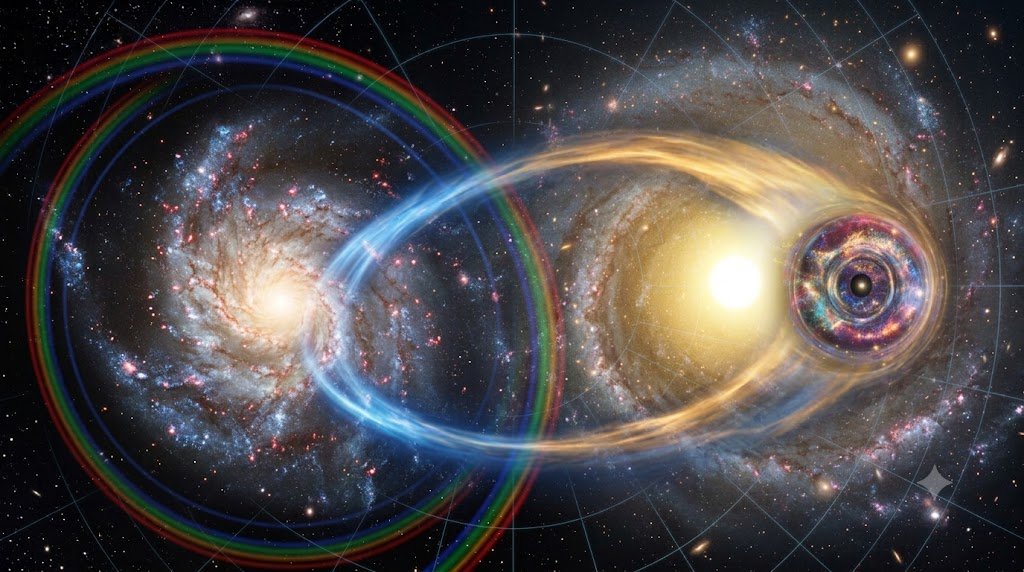
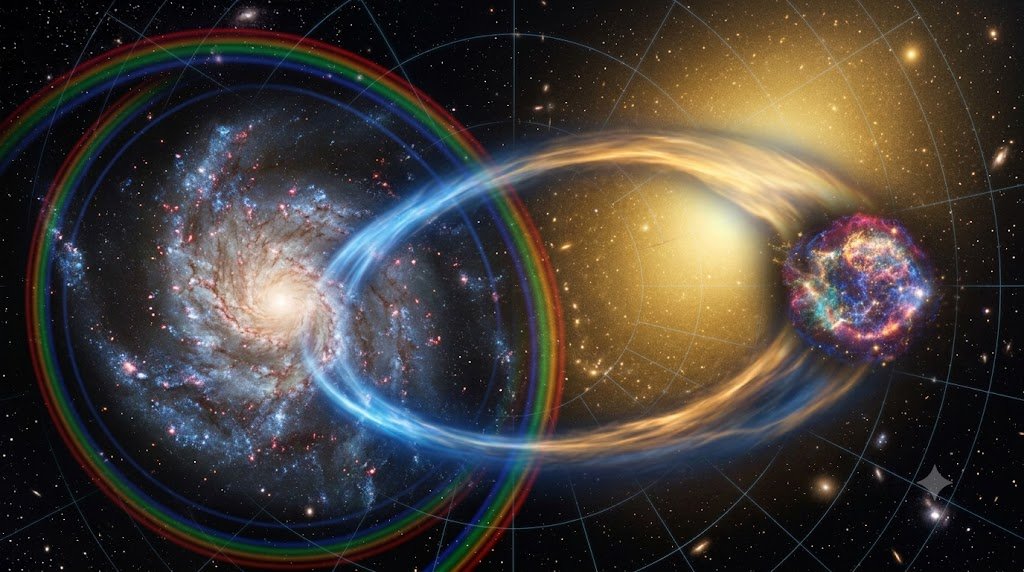
How to Find the Andromeda Galaxy from the US and UK Dark Skies, Star Hops, and Binoculars
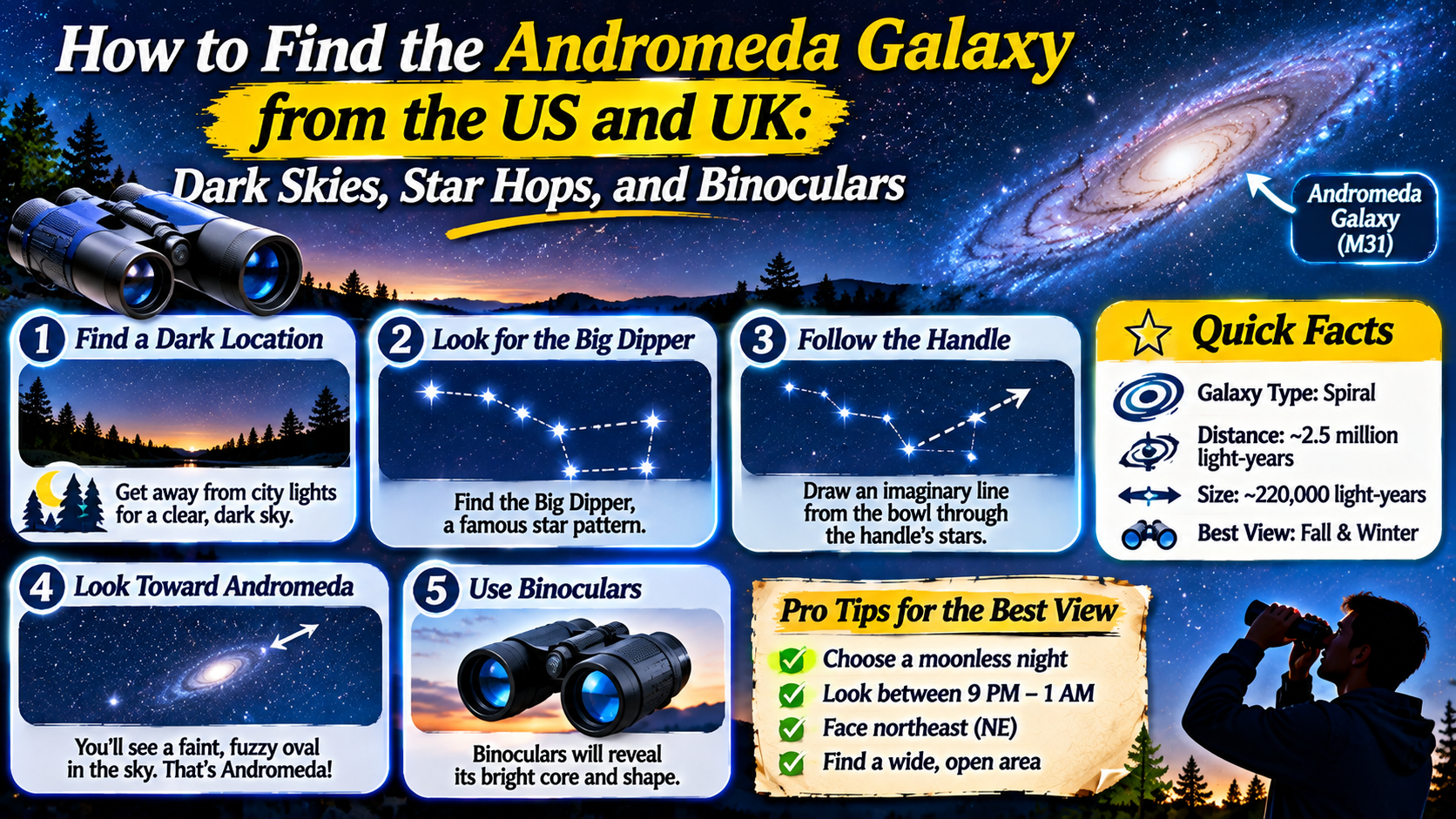
NIGHT SKY FIELD GUIDE / BEGINNER ASTRONOMY Find a Galaxy Beyond the Milky Way A practical observing guide for locating the Andromeda Galaxy using familiar constellations, dark skies, and ordinary binoculars. UNITED STATES UNITED KINGDOM BINOCULAR OBSERVING Imagine standing beneath a clear autumn sky and looking at a faint patch of light that has traveled … Read more
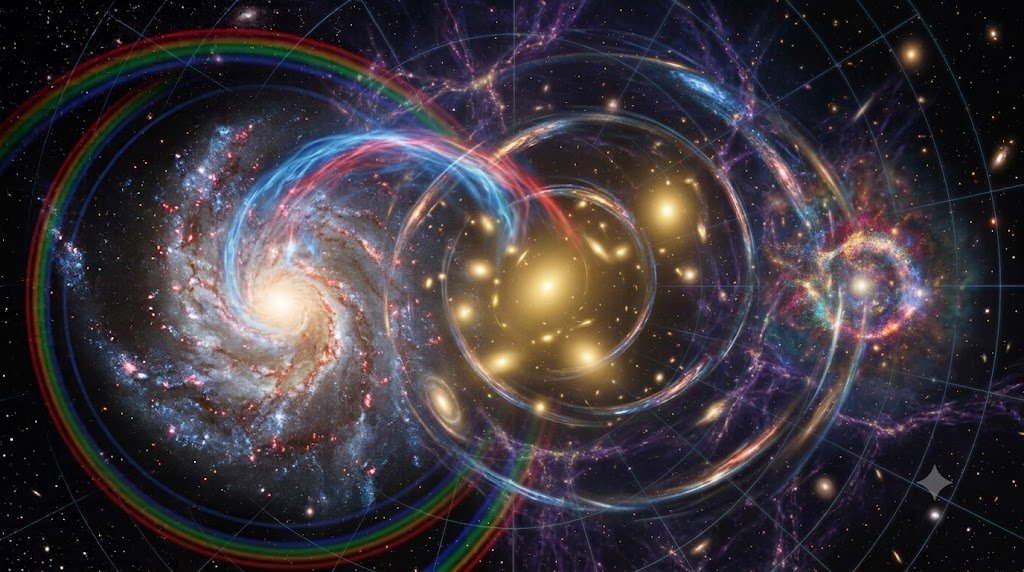
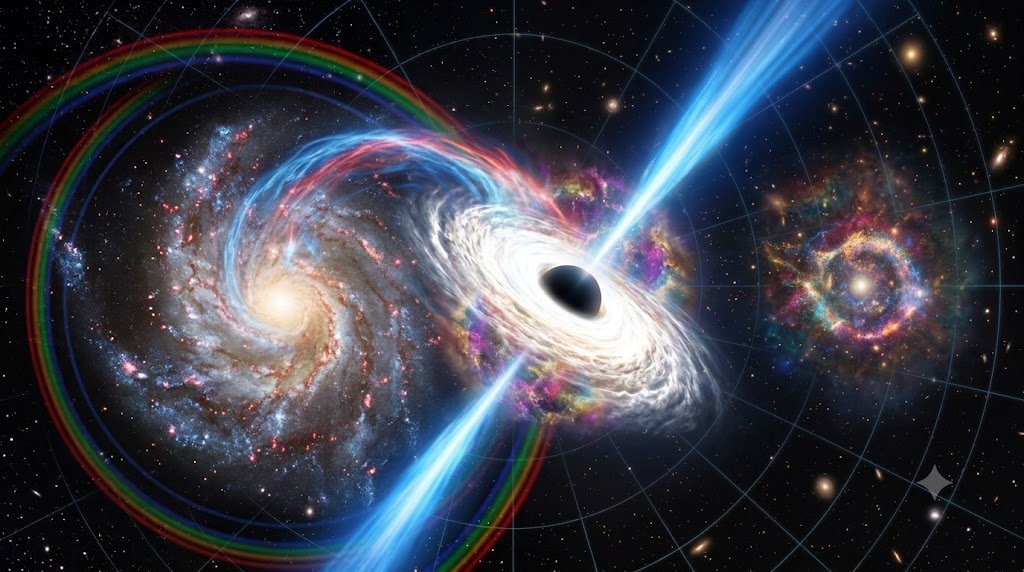
Galaxy Clusters, Gravitational Lensing, and Large-Scale Cosmic Filaments: Mapping Dark Matter

When astronomers lift their gaze beyond individual galaxies and interacting pairs, they encounter the grandest, most gargantuan coherent structures bound by gravity in the history of the universe: Galaxy Clusters. Spanning tens of millions of light-years and containing hundreds to thousands of individual galaxies, trillions of stars, vast atmospheres of multi-million-degree X-ray gas, and enormous … Read more

Active Galactic Nuclei and Quasars: Supermassive Black Hole Accretion Disks and Relativistic Jets

In the late 1950s, the advent of radio astronomy opened an entirely new window onto the cosmos, revealing mysterious celestial beacons emitting prodigious radio signals that appeared as ordinary, faint starlike points in optical telescopes. In 1963, Dutch-American astronomer Maarten Schmidt analyzed the optical spectrum of one such object, 3C 273, and made a paradigm-shattering … Read more

Galactic Morphology and the Hubble Tuning Fork: Spiral, Elliptical, and Irregular Architectures

Until the landmark observations of Edwin Hubble in the early 1920s at the Mount Wilson Observatory, the prevailing cosmological consensus held that the Milky Way encompassed the entirety of the observable universe. Faint, diffuse spirals observed through telescopes were dismissed as mere “spiral nebulae” situated within our own galactic boundaries. Hubble’s identification of Cepheid variable … Read more