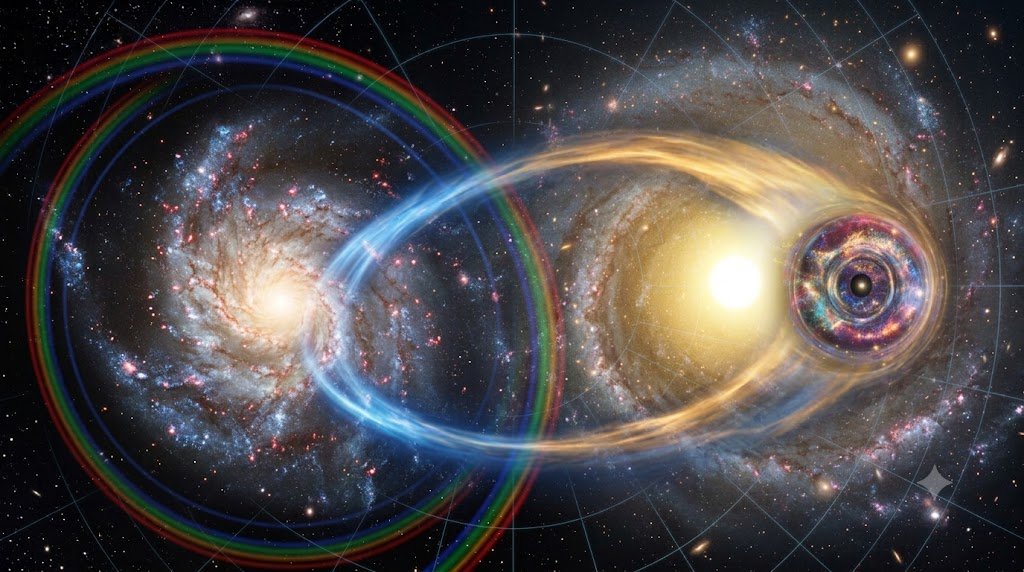
On a dark, moonless night far from urban light pollution, a luminous, milky band of pearlescent light arches from horizon to horizon across the celestial dome. To ancient Greek mythologists, it was the milk of Hera spilled across the heavens; to indigenous Australian astronomers, its dark dust rifts traced the shape of the celestial “Emu in the Sky.” Today, astrophysicists recognize this glowing river of light as our home: the Milky Way Galaxy, an immense barred spiral stellar city spanning over 100,000 light-years in diameter and containing between 100 and 400 billion stars. Because humanity is embedded directly within the mid-plane of the galactic disk, mapping our galaxy presents one of the most arduous observational challenges in astronomy—akin to attempting to map the floor plan of an intricate cathedral from a single seat in the fourteenth row. Through infrared space telescopes, radio interferometry, and astrometric satellites like Gaia, astronomers have finally unveiled the Milky Way’s magnificent architecture. This comprehensive treatise investigates the structural components of the Milky Way, its spiral density waves, the supermassive black hole Sagittarius A*, and the ancient halo dynamics that record our galaxy’s violent assembly history.
1. Structural Morphology: The Five Anatomical Components
Modern multi-wavelength cartography reveals that the Milky Way is a classic SBbc Barred Spiral Galaxy consisting of five primary structural components, each possessing distinct kinematics, chemical abundances, and stellar populations:
• The Thin Disk: The primary luminous plane. Spans ~100,000 light-years in diameter with a vertical scale height of barely 300 light-years (100 pc). Contains ~85% of the galaxy’s stars, vast cold molecular gas clouds, active star-forming regions, and young, metal-rich Population I stars (including our Sun).
• The Thick Disk: An older, thicker stellar envelope sandwiching the thin disk. Vertical scale height ~1,000 light-years (300–1,000 pc). Populated by older stars (8–12 billion years) with intermediate metallicity, dynamically heated by ancient dwarf galaxy mergers.
• The Central Bar and Bulge: A peanut-shaped central stellar bulge pierced by a massive, linear stellar bar spanning ~27,000 light-years at an angle of roughly 25 to 30 degrees to the Sun-Galactic Center line.
• The Stellar Halo: A diffuse, spherical stellar population enveloping the entire disk out to ~300,000 light-years. Dominated by ancient, metal-poor Population II stars and approximately 157 ancient globular star clusters.
• The Dark Matter Halo: A gargantuan, quasi-spherical halo of non-baryonic dark matter extending out past 1,000,000 light-years, comprising over 90% of the Milky Way’s total mass (~1.1 to 1.5 trillion solar masses).
| Component | Mass (M☉) | Scale Height | Metallicity [Fe/H] | Kinematics |
|---|---|---|---|---|
| Thin Disk | ~5 × 10^10 | ~300 pc | -0.2 to +0.3 (Solar) | Circular planar rotation (~220 km/s) |
| Thick Disk | ~6 × 10^9 | ~900 pc | -0.8 to -0.3 (Sub-solar) | Moderate rotation (~180 km/s), high dispersion |
| Bulge / Bar | ~1 × 10^10 | ~1,500 pc | -1.0 to +0.4 (Broad) | Cylindrical rotation + high random motion |
| Stellar Halo | ~1 × 10^9 | Spherical (~30 kpc) | -4.0 to -1.0 (Metal-poor) | Chaotic eccentric 3D orbits (Negligible net spin) |
| Dark Matter Halo | ~1 × 10^12 | Spherical (> 200 kpc) | N/A (Non-baryonic) | Virialized velocity dispersion (~150 km/s) |
2. Spiral Arms and Solar Kinematics in the Milky Way Disk
Mapping the spiral structure of our own galaxy requires penetrating the dense curtain of interstellar dust that obscures optical light along the galactic plane (the Zone of Avoidance). By utilizing radio wavelengths (such as the 21-cm hyperfine spin-flip line of neutral atomic hydrogen and the 2.6-mm rotational transition of carbon monoxide) and trigonometric parallaxes of interstellar water and methanol masers measured by Very Long Baseline Interferometry (VLBI), astronomers have charted four major spiral arms winding through the disk:
- The Scutum-Centaurus Arm: A major, dense spiral arm emerging from the near end of the galactic bar, displaying high stellar and gas densities.
- The Perseus Arm: The other primary major spiral arm, originating from the far end of the bar and wrapping outside the solar orbit.
- The Sagittarius-Carina Arm: An intermediate, gas-rich arm situated interior to the solar orbit, famous for hosting spectacular starburst nebulae including the Carina Nebula (NGC 3372) and Lagoon Nebula (M8).
- The Outer / Norma Arm: The most distant recognizable arm, tracing the outer perimeter of the gas disk.
The Orion-Cygnus Spur and the Solar Neighborhood
Our Solar System does not reside in one of the major spiral arms. Rather, we orbit within a local structural bridge or filament known as the Orion-Cygnus Spur (or Local Arm), situated roughly halfway between the Sagittarius and Perseus arms at a distance of approximately 26,700 light-years (8.2 kiloparsecs) from the Galactic Center.
The Sun completes one full orbit around the Galactic Center—a Galactic Cosmic Year—once every 225 to 250 million years, traveling at a circular orbital speed of approximately 220 kilometers per second (500,000 mph). Since its formation 4.6 billion years ago, our solar system has completed approximately 20 cosmic orbits, witnessing the birth and death of thousands of neighboring stellar systems.
3. The Galactic Center and Sagittarius A*: The Monster in the Core
At the exact rotational and dynamical heart of the Milky Way, situated in the direction of the constellation Sagittarius, lies the Galactic Center. Hidden behind more than 30 visual magnitudes of interstellar dust extinguishing all optical light by a factor of 1 trillion, the galactic core is an extreme astrophysical laboratory accessible only through infrared, radio, and X-ray astronomy.
The Nobel-Prize Winning Orbit of S-Stars
Over a rigorous twenty-five-year observational campaign using the Keck Telescopes in Hawaii and the Very Large Telescope in Chile, research teams led by Andrea Ghez and Reinhard Genzel tracked the individual orbital trajectories of young, luminous B-type stars (the S-stars) swarming tightly within the central light-month of the galactic core. Their work culminated in the awarding of the 2020 Nobel Prize in Physics.
The star designated S2 orbits the unseen central anchor every 16.05 years in an extreme ellipse. At periastron (closest approach) in May 2018, S2 soared within barely 17 light-hours (120 Astronomical Units, or four times the orbit of Neptune) of the central point mass, hurtling through the gravitational inferno at a staggering 7,650 kilometers per second (nearly 3% of the speed of light!).
Applying Kepler’s third law to S2’s orbit proves unequivocally that a mass of 4.15 million solar masses is concentrated within a volume smaller than our solar system. No known physical object other than a Supermassive Black Hole can maintain such staggering density without collapsing into an event horizon.
The Event Horizon Telescope: Direct Silhouette of Sgr A*
On May 12, 2022, the international Event Horizon Telescope (EHT) Collaboration—a planet-scale millimeter-wave Very Long Baseline Interferometer linking radio observatories from Hawaii to the South Pole—published the first direct radio image of Sagittarius A*. The image reveals a glowing, turbulent ring of relativistic synchrotron plasma orbiting at near-light speed, framing the dark, circular shadow of the black hole. Sgr A*’s Schwarzschild radius is approximately 12 million kilometers (barely 0.08 AU), matching the precise predictions of Albert Einstein’s General Theory of Relativity to extraordinary precision.
4. Galactic Archaeology and Halo Dynamics: The Gaia Revolution
The European Space Agency’s Gaia Space Astrometry Mission has launched an unprecedented revolution in our understanding of Milky Way history. By measuring the ultra-precise three-dimensional positions, parallaxes, and proper motions of over 1.8 billion stars, Gaia has enabled the emergence of Galactic Archaeology—the science of reconstructing the evolutionary past of our galaxy by interrogating the kinematics and chemical fingerprints of ancient stars.
Gaia-Enceladus / The Sausage: A Landmark Primordial Collision
In 2018, Gaia astrometric data revealed a colossal population of stars in the solar neighborhood sharing eccentric, elongated radial orbits that plunge through the galactic disk. Subsequent chemical analysis confirmed that these stars possess a distinct chemical alpha-abundance fingerprint compared to native disk stars.
Astrophysicists realized that these stars represent the stellar debris of a major dwarf galaxy—dubbed Gaia-Enceladus (or the Sausage)—possessing roughly 10 billion solar masses that crashed into the nascent Milky Way approximately 10 billion years ago. This cataclysmic merger dynamically shook the primordial thin disk, puffing it upward into what we now observe as the Milky Way’s thick disk, while the shattered remnants of the dwarf galaxy were assimilated into the diffuse stellar halo.
Tidal Streams and Globular Clusters
The stellar halo is laced with long, coherent ribbons of stars known as stellar tidal streams. As satellite dwarf galaxies and dense globular clusters are pulled in by the Milky Way’s gravitational tidal field, differential forces rip stars away from the satellite, stretching them out into elongated orbital streams tracing the gravitational potential. The famous Sagittarius Tidal Stream wraps multiple times completely around the Milky Way, recording the ongoing, active tidal cannibalism of the Sagittarius Dwarf Spheroidal Galaxy.
5. Giant Energetic Phenomena: The Fermi Bubbles and eROSITA Lobes
In 2010, NASA’s Fermi Gamma-Ray Space Telescope made a sensational discovery: two gargantuan, glowing lobes of energetic gamma radiation erupting perpendicular to the galactic plane from the Galactic Center. These Fermi Bubbles span an astonishing 25,000 light-years above and below the galactic disk, standing like towering cosmic hourglasses.
Subsequent observations by the Russian-German eROSITA X-ray space telescope confirmed even larger, enveloping eROSITA Bubbles stretching across 45,000 light-years. These colossal structures represent the relics of an immense energetic explosion that occurred between 2 and 6 million years ago, when Sagittarius A* gorged upon a sudden influx of gas, launching relativistic jets and powerful shockwaves that blasted huge cavities through the hot gaseous halo of our galaxy.
6. The Radcliffe Wave and the Warped Galactic Disk
In 2020, three-dimensional stellar mapping revealed that the local interstellar medium is organized into a colossal, undulating coherent gas filament spanning 9,000 light-years: the Radcliffe Wave. This serpentine wave of star-forming molecular clouds rises up to 500 light-years above and below the galactic midplane, oscillating like a massive galactic string.
Furthermore, precision astrometry of Classical Cepheid variable stars proves that the entire outer disk of the Milky Way is not flat; it is dramatically warped and flared into an S-like sinusoidal curve, curving upwards on one side and downwards on the opposite flank. This macroscopic warp precesses around the galaxy like a spinning top, dynamically driven by the continuous gravitational torque exerted by the orbiting Large and Small Magellanic Cloud satellite galaxies.
7. The Gould Belt, Local Bubble, and Solar Trajectory
Our solar neighborhood is embedded within a unique astrophysical environment known as the Local Bubble—a 1,000-light-year-wide cavity in the interstellar medium filled with hot, million-degree, low-density X-ray-emitting plasma. Recent high-precision 3D velocity mappings by the Gaia space observatory demonstrate that nearly all nearby star-forming molecular clouds (Taurus, Ophiuchus, Perseus) sit on the surface of this expanding bubble, which was blown outward by a succession of 15 to 20 supernova explosions occurring over the past 14 million years.
Furthermore, the solar system is currently traversing the Gould Belt—a tilted ring of bright, young OB stars and giant molecular clouds inclined by roughly 18 degrees to the galactic plane. As the Sun moves through the disk, it also exhibits a vertical oscillation with a period of roughly 60 to 70 million years, bobbing above and below the galactic midplane like a cork on water. This vertical motion brings the Solar System through varying gravitational tidal environments and cosmic ray densities, a periodic cycle that geologists and paleontologists have hypothesized may subtly correlate with terrestrial impact cratering rates and mass extinction epochs.
7. The Future Destiny: The Andromeda-Milky Way Collision (Milkomeda)
The Milky Way is not an isolated island. It is the second-largest galaxy in the Local Group, gravitationally locked in an inexorable dance with its larger sibling, the Andromeda Galaxy (M31), located 2.5 million light-years away. Doppler measurements confirm that Andromeda is hurtling toward the Milky Way at approximately 110 kilometers per second.
In approximately 4.5 billion years, the two giant galaxies will collide. Over several hundred million years of mutual gravitational perturbation, their spiral disks will be ripped apart into magnificent tidal bridges. Because interstellar space within galaxies is vast—the average distance between stars is tens of trillions of kilometers—virtually no individual stars will physically collide during the merger. However, their vast interstellar gas clouds will smash together, igniting a galaxy-wide starburst and feeding their central supermassive black holes into luminous quasars. Ultimately, the two systems will coalesce into a single, majestic, giant elliptical galaxy: Milkomeda. Our home galaxy is a living, evolving ecosystem—born of ancient mergers, shaped by internal density waves, and destined for cosmic transformation.