Southern Hemisphere Skies: Navigating Crux, the Magellanic Clouds, and Centaurus

For observers accustomed to the northern celestial dome, traveling south across Earth’s equator is a breathtaking, disorienting revelation. Familiar northern constellations sink beneath the horizon, replaced by an unfamiliar, dazzling celestial wonderland blazing with unparalleled brilliance. The southern night sky is universally acknowledged by astrophysicists and amateur stargazers as the most visually spectacular half of … Read more

The Zodiacal Constellations and the Ecliptic: Planetary Transit Paths and Deep-Sky Treasures

Across all ancient cultures, no sector of the nocturnal sky captivated stargazers more profoundly than the narrow celestial highway traversed by the Sun, Moon, and planets. To the Babylonians, Egyptians, Greeks, and Vedic astronomers, this golden ribbon was the Zodiac—literally the “circle of animals”—a belt of constellations framing the immutable cosmic choreography of the Solar … Read more

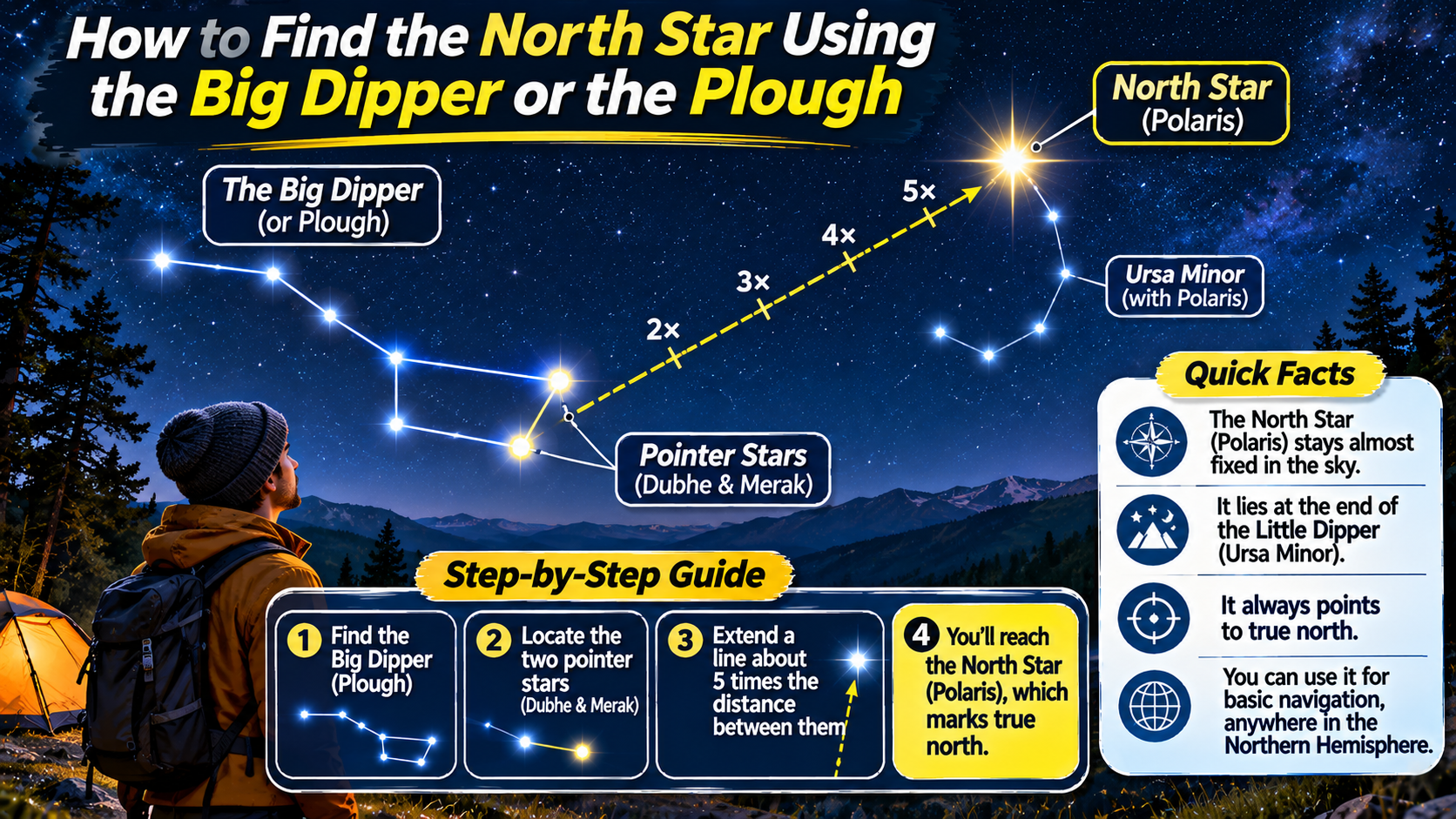
Ursa Major, the North Star, and Circumpolar Asterisms: Ancient Navigation to Modern Astronomy

For millennia, long before the invention of magnetic compasses, sextants, or satellite Global Positioning Systems, travelers traversing trackless oceans and barren desert dunes looked upward to find their bearings. Anchoring their nocturnal navigation was a faithful, unchanging beacon in the northern sky: Polaris, the North Star, framed by the unmistakable silhouette of seven brilliant stars … Read more

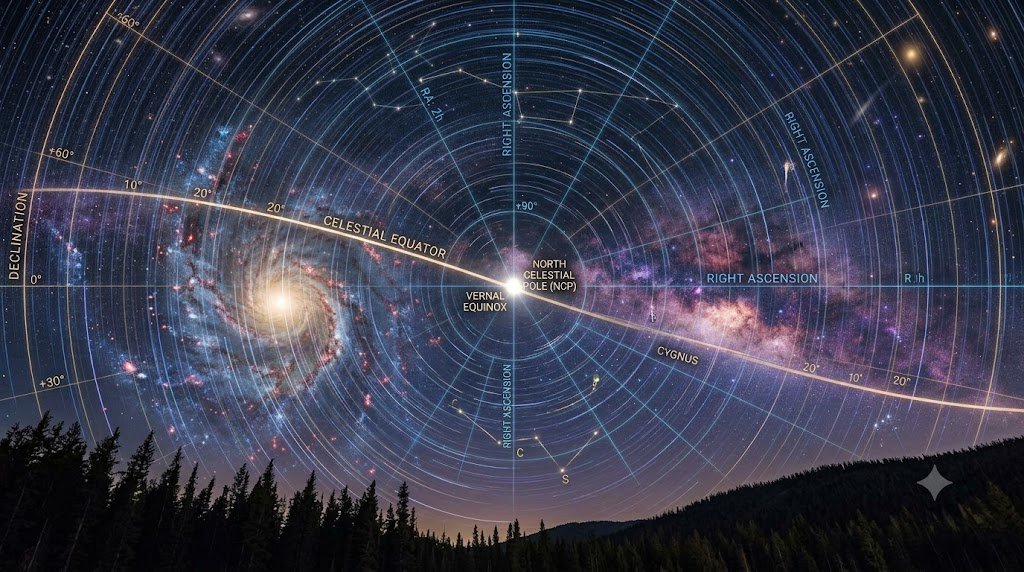
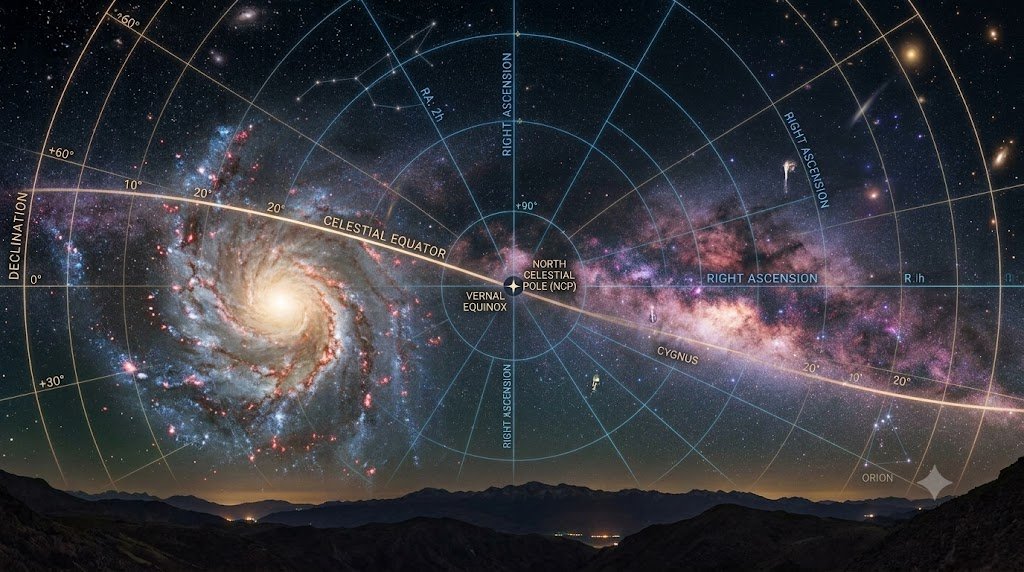
The Celestial Coordinate System: Right Ascension, Declination, and the Precession of Equinoxes

To an observer gazing upward into a pristine, unpolluted night sky, the universe appears as a colossal, rotating crystalline vault: an immense dome peppered with glistening stars, across which the Moon, planets, and Sun trace majestic, predictable paths. Since antiquity, humanity has sought to impose mathematical order upon this celestial expanse. Just as cartographers divide … Read more