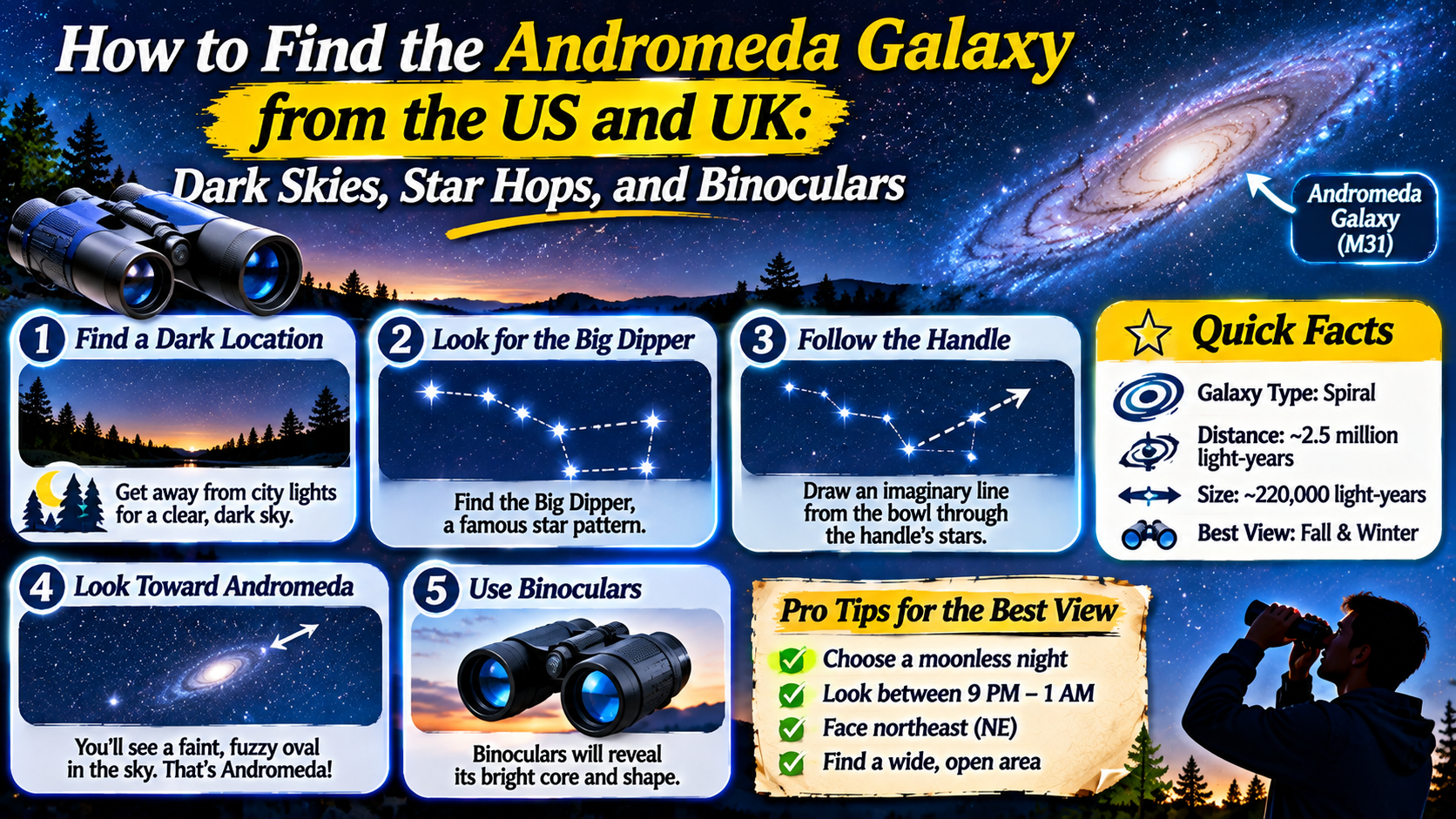
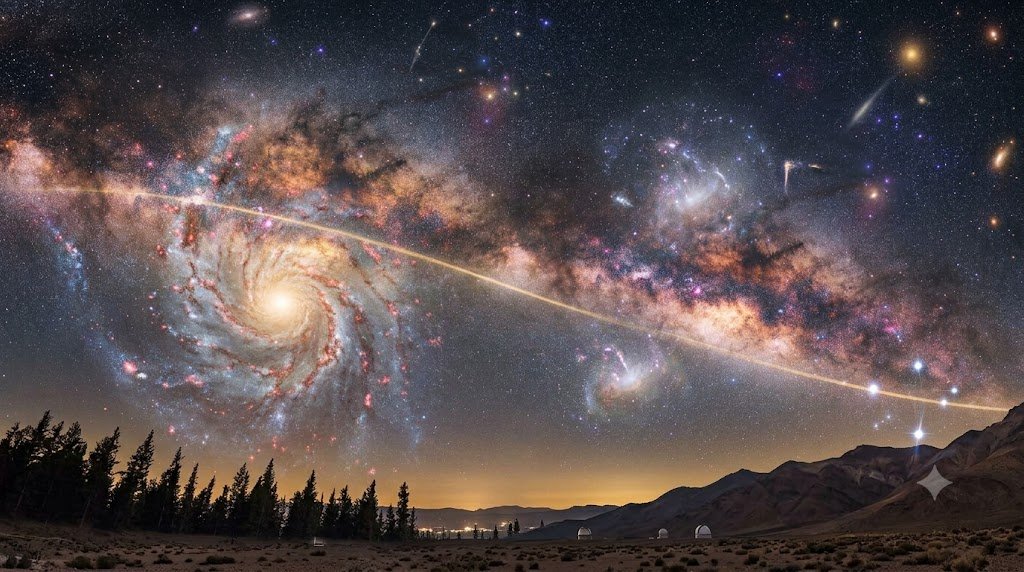
How to Find the Andromeda Galaxy from the US and UK Dark Skies, Star Hops, and Binoculars

NIGHT SKY FIELD GUIDE / BEGINNER ASTRONOMY Find a Galaxy Beyond the Milky Way A practical observing guide for locating the Andromeda Galaxy using familiar constellations, dark skies, and ordinary binoculars. UNITED STATES UNITED KINGDOM BINOCULAR OBSERVING Imagine standing beneath a clear autumn sky and looking at a faint patch of light that has traveled … Read more

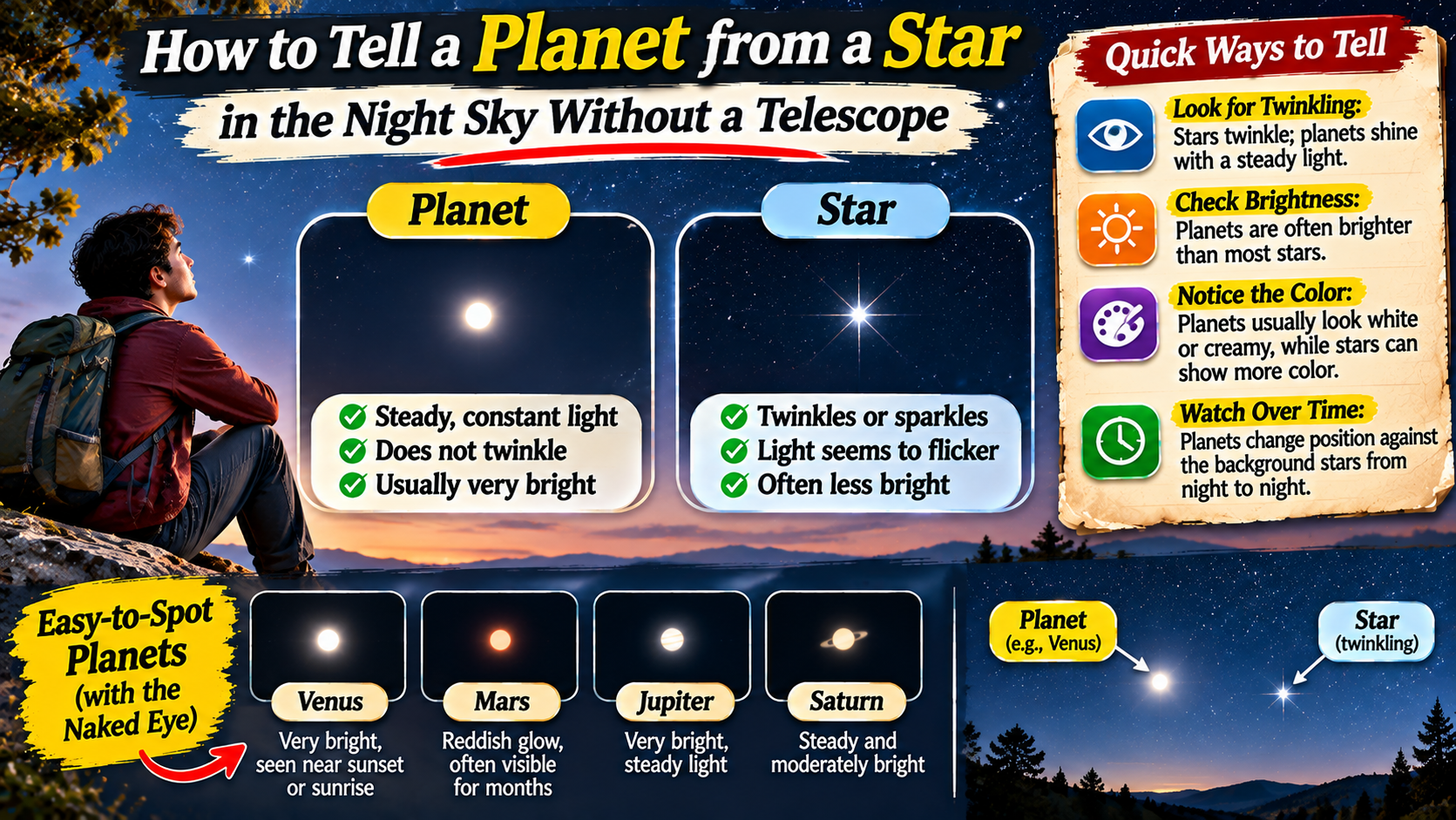
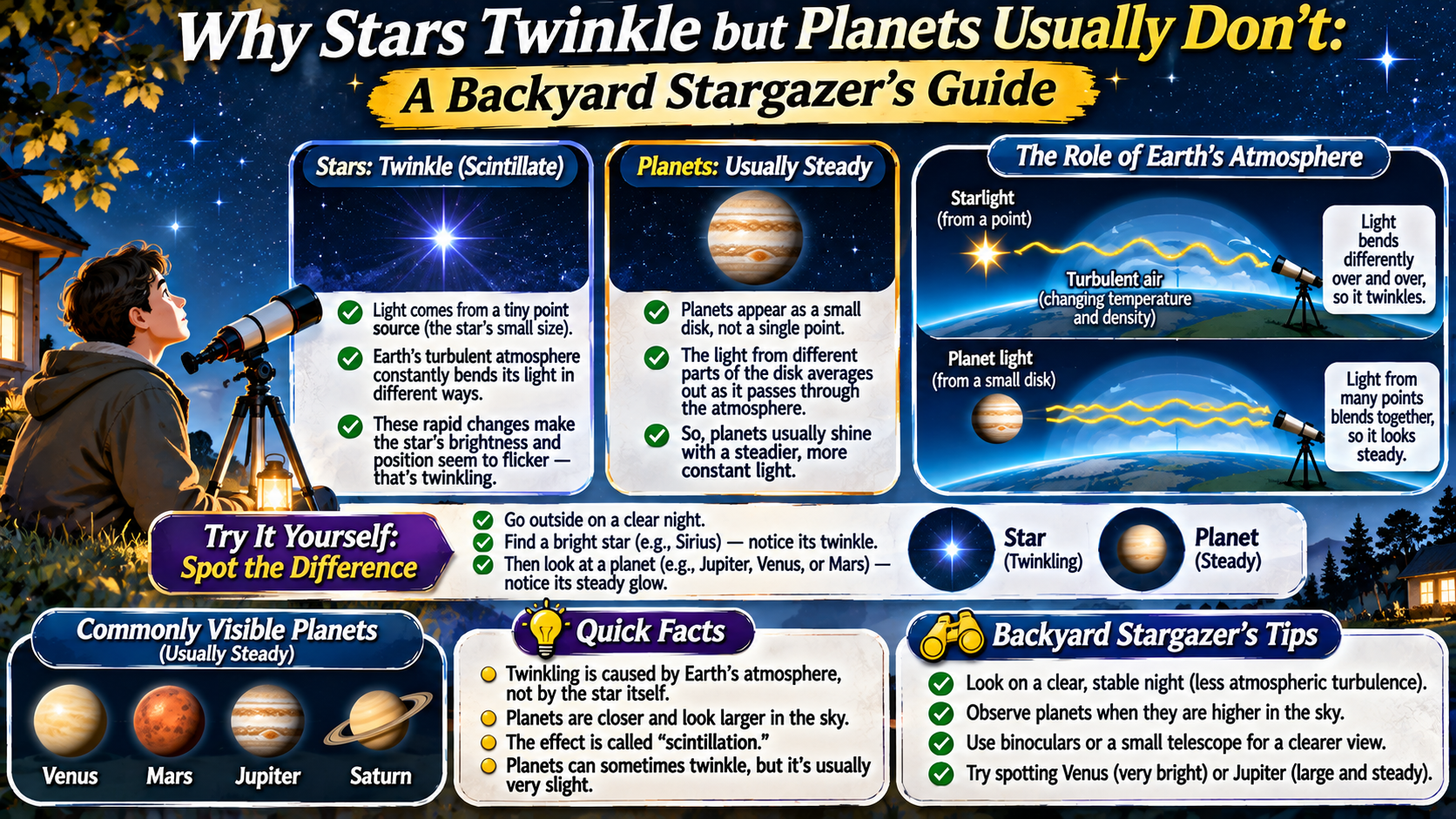
Why Stars Twinkle but Planets Usually Don’t Backyard Stargazer’s Guide

BACKYARD ASTRONOMY / NIGHT-SKY OBSERVATIONS Why Some Lights in the Night Sky Sparkle While Others Shine Steadily Discover how Earth’s atmosphere makes stars twinkle, why planets usually appear steadier, and how to recognize the difference during your next stargazing session. ATMOSPHERIC TURBULENCE STARS VS. PLANETS STARGAZING TIPS On a clear night, the sky can appear … Read more

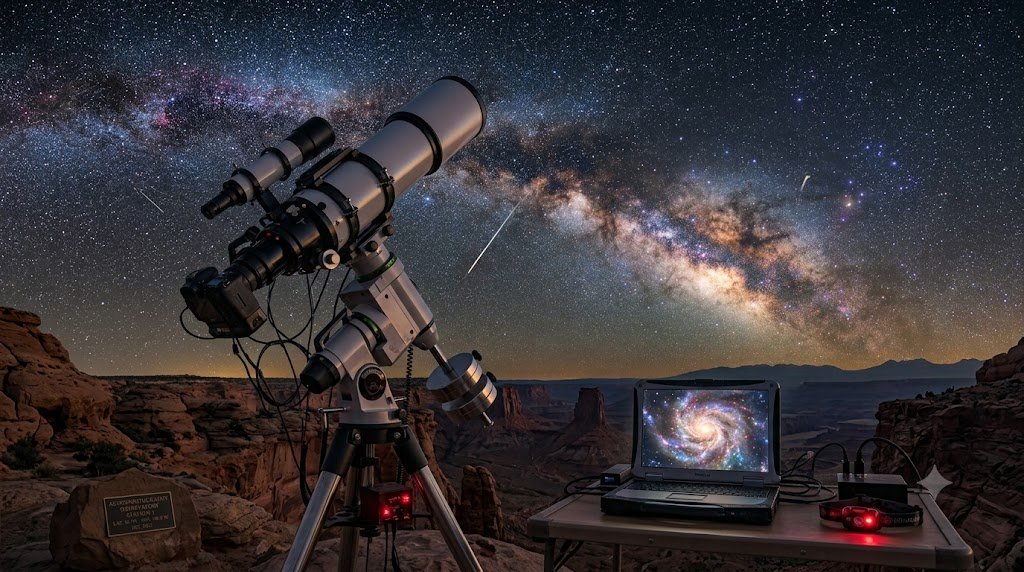
Deep-Sky Astrophotography Essentials: Sensor Physics, Tracking Mounts, Stacking, and Calibration Frames

To gaze through a telescope eyepiece at a distant galaxy is an unforgettable visual experience, yet the human eye is constrained by its biological limitations: our retinas process light in real-time fractions of a second (roughly 1/10th of a second exposure time), rendering faint nebulae as soft, monochrome gray clouds. Deep-Sky Astrophotography liberates astronomy from … Read more

Dark-Sky Site Selection and Atmospheric Seeing: The Bortle Scale, Transparency, and Scintillation

Every astronomer quickly confronts an humbling reality of observational astronomy: the finest telescope ever engineered is completely powerless if looking through turbulent, degraded atmosphere or a sky washed out by artificial light pollution. Ground-based astronomers do not observe space directly; we observe it through the turbulent, fluid, optical ocean of Earth’s atmosphere. A modest 4-inch … Read more

Backyard Astronomy Optics: Refractors vs. Reflectors, Focal Lengths, and Eyepiece Physics

Astronomy is unique among the physical sciences: while particle physicists require multi-billion-dollar underground colliders to probe subatomic reality, amateur astronomers standing in their own backyards can inspect volcanic calderas on the Moon, resolve the cloud belts of Jupiter, and capture photons that departed distant galaxies during the age of the dinosaurs. The fundamental instrument bridging … Read more

Southern Hemisphere Skies: Navigating Crux, the Magellanic Clouds, and Centaurus

For observers accustomed to the northern celestial dome, traveling south across Earth’s equator is a breathtaking, disorienting revelation. Familiar northern constellations sink beneath the horizon, replaced by an unfamiliar, dazzling celestial wonderland blazing with unparalleled brilliance. The southern night sky is universally acknowledged by astrophysicists and amateur stargazers as the most visually spectacular half of … Read more

The Zodiacal Constellations and the Ecliptic: Planetary Transit Paths and Deep-Sky Treasures

Across all ancient cultures, no sector of the nocturnal sky captivated stargazers more profoundly than the narrow celestial highway traversed by the Sun, Moon, and planets. To the Babylonians, Egyptians, Greeks, and Vedic astronomers, this golden ribbon was the Zodiac—literally the “circle of animals”—a belt of constellations framing the immutable cosmic choreography of the Solar … Read more

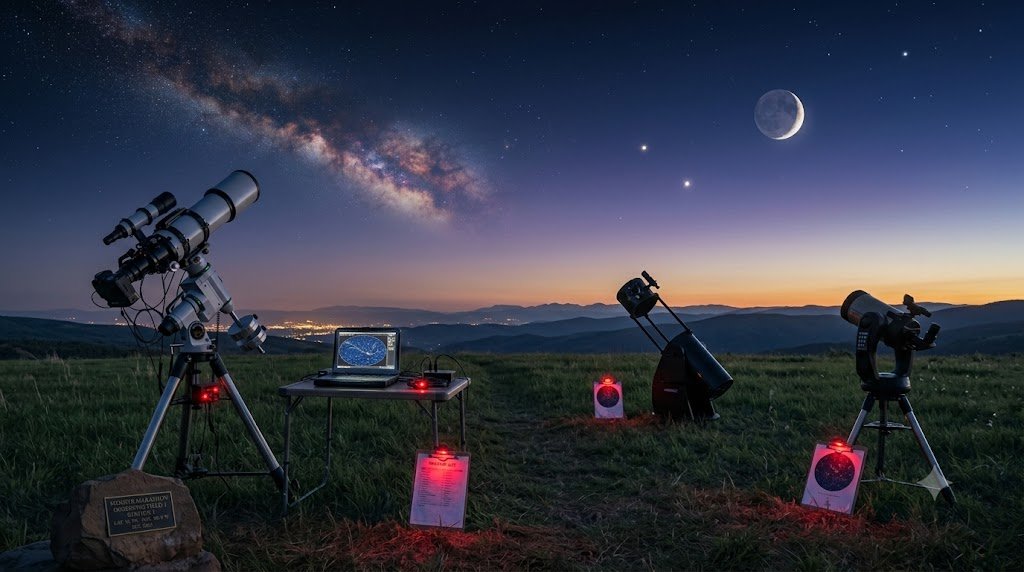
The Comprehensive Messier Marathon Guide: Systematic Strategies for Observing 110 Deep-Sky Objects

In the annals of observational amateur astronomy, there is no endurance challenge more iconic, thrilling, and grueling than the Messier Marathon. Conceived independently in the 1970s by American and European amateur astronomers, the Marathon challenges an observer to systematically locate, view, and log all 110 deep-sky objects cataloged by French astronomer Charles Messier in a … Read more